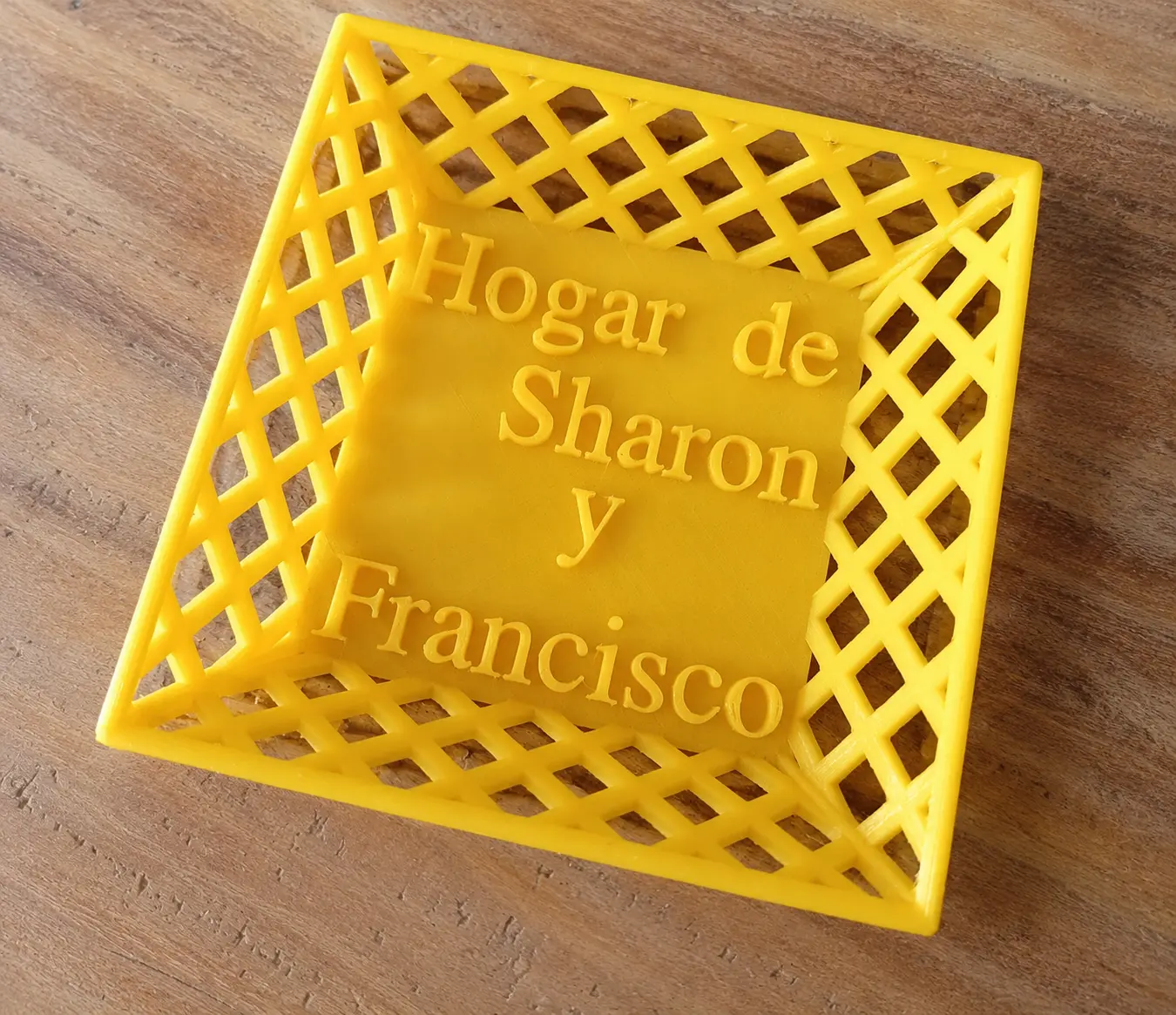
A 3D printer can produce much more than a curious object to keep on a desk. Combined with design, measurements and attention to detail, it becomes a tool for turning an idea into a concrete, useful object built around a person or a specific space.
For TekCare360, custom 3D printing starts with this approach: listen to the need, understand how the object will be used and design a solution that makes sense in real life. It may be a gift, a hard-to-find replacement part, a support for the home or an accessory designed to make a particular activity easier.
From the need to the 3D model
The final result depends greatly on the work done before pressing the print button. We start from the actual use of the object, the available measurements and the constraints of the environment. We then define the shape, fixing points, thicknesses, tolerances, colour and most suitable material.
- Gather the requirements and main measurements
- Design or modify the 3D model
- Check dimensions and mounting points
- Choose the material and colour according to use
- Prototype and check the most delicate parts
- Final print, finishing and object inspection
Personalised gifts with a story
3D printing is especially interesting when a gift should recall a person, a home or an important moment. A piece of text, a recognisable shape, a specific colour or a small detail can turn a simple object into something you will not find on a shop shelf.
When 3D printing solves a real problem
Not everything has to be new or bought ready-made. Sometimes you only need a support with a particular shape, a replacement part that is no longer available or a component suited to a specific window, piece of furniture or device. In these cases, custom design adapts the object to real conditions instead of adapting the environment to a standard product.
A foldable support for phones and tablets
Another example is an adjustable, foldable stand for a phone or tablet. The design makes it possible to study the angle, stability, charging-cable clearance and the ability to carry it without taking up too much space. It is a small object, but it contains many of the advantages of 3D printing: rapid iteration, personalisation and the possibility of correcting the model after each test.
From photograph to three-dimensional bust
One of the most personal possibilities is turning a photograph into a three-dimensional model. The result depends on the quality and angle of the available images, but the process can create a different kind of keepsake: a bust, small portrait or commemorative object to keep over time.
Even small details can be personalised
Personalisation is not only about large objects. Decorative letters, magnets, bookends and small accessories can be designed with coordinated sizes and colours, turning an everyday detail into something more organised or representative.
What can be personalised?
- The object's shape, dimensions and proportions
- Names, dedications, logos or raised and engraved lettering
- Colour, colour combinations and surface finish
- Holes, hooks, joints and fixing points
- The angle and position of supports for phones, tablets or accessories
- Quantities and variations for events, gifts or small batches
Material and finish depend on use
There is no single material suitable for every project. A rigid filament that is easy to finish may be enough for decorative objects and many indoor accessories; for parts exposed to more heat, moisture or stress, a different material may be more appropriate. The choice considers the environment, load, temperature, required flexibility and final appearance.
It is equally important to be realistic: 3D printing does not automatically make an object indestructible and does not replace a certified component when safety, high temperatures or heavy loads are involved. Design, material and use must always be assessed together.
A project can start from a very simple idea
You do not need to arrive with a 3D file already prepared. You can show us a photograph, sketch, object to replicate or a measurement, or simply explain which problem you would like to solve. From there we can assess feasibility, propose a solution and define the right level of personalisation together.